
IM5116D2DDBG-25

Intelligent Memory
822-IM5116D2DDBG-25
IM5116D2DDBG-25

Mfr.:

Description:
DRAM DDR2 512Mb, 1.8V, 32Mx16, 400MHz (800Mbps), 0C to +95C, FBGA-84

ECAD Model:
Download the free Library Loader to convert this file for your ECAD Tool. Learn more about the ECAD Model.

Availability

Stock:
0

You can still purchase this product for backorder.

Factory Lead Time:
8 Weeks Estimated factory production time for quantities greater than shown.
Minimum: 1   Multiples: 1
Unit Price:
$-.--
Ext. Price:
$-.--
Est. Tariff:

Pricing (USD)

Qty. Unit Price
Ext. Price
$3.60 $3.60
$3.36 $33.60
$3.26 $81.50
$3.19 $159.50
$3.10 $310.00
$2.98 $622.82
$2.90 $1,212.20
$2.85 $2,978.25

Product Attribute Attribute Value Select Attribute
Intelligent Memory
Product Category: DRAM
RoHS:  
SDRAM - DDR2
512 Mbit
16 bit
400 MHz
FBGA-60
32 M x 16
400 ps
1.7 V
1.9 V
- 40 C
+ 95 C
IM5116D2
Tray
Brand: Intelligent Memory
Country of Assembly: Not Available
Country of Diffusion: Not Available
Country of Origin: TW
Moisture Sensitive: Yes
Mounting Style: SMD/SMT
Product Type: DRAM
Factory Pack Quantity: 209
Subcategory: Memory & Data Storage
Supply Current - Max: 90 mA
Unit Weight: 154 mg
Products found:
To show similar products, select at least one checkbox
Select at least one checkbox above to show similar products in this category.
Attributes selected: 0

CAHTS:
8542320020
USHTS:
8542320028
MXHTS:
8542320299
ECCN:
EAR99

Dynamic Random Access Memory (DRAM)

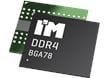
Intelligent Memory Dynamic Random Access Memory (DRAM) includes a full range of JEDEC-compliant DRAMs and ECC DRAMs (SDRAM, DDR, DDR2, DDR3, DDR4, LPDDR4). From an application's point of view, these components work like a monolithic device. The DRAM devices allow for maximum levels of memory density without altering existing board layouts or designs.

Double Data Rate 2 (DDR2) SDRAM

Intelligent Memory Double Data Rate (DDR2) Synchronous DRAM (SDRAM) are eight-bank devices that achieve high-speed data transfer rates. Interleaving the eight memory banks allows random access operations faster than standard DRAMs. A chip architecture prefetches multiple bits and then synchronizes the output data to a system clock. All control, address, and circuits are synchronized with the positive edge of an externally supplied clock. In a source-synchronous manner, I/Os are synchronized with a pair of bidirectional strobes. A sequential, gapless data rate is possible depending on the device's burst length, CAS latency, and speed grade.