
B-20L-25

KEMET
80-B-20L-25
B-20L-25

Mfr.:

Description:
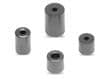
Ferrite Cable Cores Ferrite Bead Core EMI 1mm

ECAD Model:
Download the free Library Loader to convert this file for your ECAD Tool. Learn more about the ECAD Model.

In Stock: 53,963

Stock:
53,963
Can Dispatch Immediately
On Order:
60,000
Factory Lead Time:
29
Weeks Estimated factory production time for quantities greater than shown.
Minimum: 1   Multiples: 1
Unit Price:
$-.--
Ext. Price:
$-.--
Est. Tariff:

Pricing (USD)

Qty. Unit Price
Ext. Price
$0.19 $0.19
$0.111 $1.11
$0.098 $9.80
$0.094 $47.00
$0.091 $91.00
$0.087 $217.50
$0.074 $370.00
$0.073 $2,190.00

Product Attribute Attribute Value Select Attribute
KEMET
Product Category: Ferrite Cable Cores
RoHS:  
B-20L
Round Cable Cores Solid
1 mm
2.5 mm
1.2 mm
Bulk
Nickel Zinc
Brand: KEMET
Country of Assembly: Not Available
Country of Diffusion: Not Available
Country of Origin: CN
Frequency: 300 MHz
Maximum Operating Temperature: + 85 C
Minimum Operating Temperature: - 25 C
Product Type: Ferrite Cable Cores
Factory Pack Quantity: 30000
Subcategory: Ferrites
Test Frequency: 300 MHz
Type: Bead Core
Part # Aliases: UECB200L250000
Unit Weight: 30 mg
Products found:
To show similar products, select at least one checkbox
Select at least one checkbox above to show similar products in this category.
Attributes selected: 0

This functionality requires JavaScript to be enabled.

CNHTS:
8548000001
CAHTS:
8548000000
USHTS:
8548000000
JPHTS:
854800000
KRHTS:
8532240000
TARIC:
8543900090
BRHTS:
85322490
ECCN:
EAR99

EMI Cores

KEMET EMI Cores provide high-frequency noise suppression in electronic circuits. There are two ferrite material options for KEMET EMI Cores, namely Nickel-Zinc (NiZn) and Manganese Zinc (MnZn). The NiZn core material is typically effective for theMHz band range (FM-band frequencies), whereas the MnZn core material is typically effective for the kHz band range (AM-band frequencies). The MnZn core material offers a lower resistance compared to the NiZn and hence adequate insulation is required before use (recommended to measure the actual frequency-range effectiveness in the target application). The effective frequency range varies depending on core shape, size, and the number of turns.