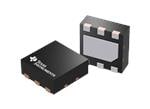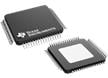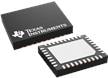



BQ294506DRVR

Texas Instruments
595-BQ294506DRVR
BQ294506DRVR

Mfr.:

Description:
Battery Management Overvoltage protecti on device for 2- to BQ294506DRVT

ECAD Model:
Download the free Library Loader to convert this file for your ECAD Tool. Learn more about the ECAD Model.

In Stock: 2,975

Stock:
2,975 Can Dispatch Immediately
Factory Lead Time:
6 Weeks Estimated factory production time for quantities greater than shown.
Minimum: 1   Multiples: 1
Unit Price:
$-.--
Ext. Price:
$-.--
Est. Tariff:
Packaging:
Full Reel (Order in multiples of 3000)

Pricing (USD)

Qty. Unit Price
Ext. Price
Cut Tape / MouseReel™
$0.57 $0.57
$0.564 $5.64
$0.48 $48.00
$0.45 $450.00
Full Reel (Order in multiples of 3000)
$0.233 $699.00
$0.227 $1,362.00
† A MouseReel™ fee of $7.00 will be added and calculated in your basket. All MouseReel™ orders are non-cancellable and non-returnable.

Alternative Packaging

Mfr. Part No.:
Packaging:
Reel, Cut Tape, MouseReel
Availability:
In Stock
Price:
$1.94
Min:
1

Product Attribute Attribute Value Select Attribute
Texas Instruments
Product Category: Battery Management
RoHS:  
Battery Protection
Lithium-ion
30 V
4.5 mA
3 V to 25 V
WSON-6
SMD/SMT
BQ294506
Reel
Cut Tape
MouseReel
Brand: Texas Instruments
Country of Assembly: Not Available
Country of Diffusion: Not Available
Country of Origin: CN
Development Kit: BQ294502EVM-033
Maximum Operating Temperature: + 85 C
Minimum Operating Temperature: - 40 C
Operating Supply Current: 1 uA
Product Type: Battery Management
Factory Pack Quantity: 3000
Subcategory: PMIC - Power Management ICs
Products found:
To show similar products, select at least one checkbox
Select at least one checkbox above to show similar products in this category.
Attributes selected: 0

This functionality requires JavaScript to be enabled.

USHTS:
8542390090
ECCN:
EAR99

BQ2945xy Overvoltage Protection Devices

Texas Instruments BQ2945xy Overvoltage Protection Devices are secondary-level voltage monitors and protectors for Li-ion battery pack systems. Each cell on the BQ2945xy is monitored independently for an overvoltage condition. Additionally, the configuration on the devices facilitates whether the output is triggered after a fixed delay if any of the two or three cells has an overvoltage condition. This output is initiated into a high state after an overvoltage condition meets the specified delay timer.