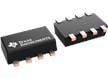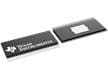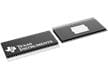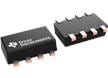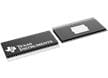







TPS92682QRHBRQ1

Texas Instruments
595-TPS92682QRHBRQ1
TPS92682QRHBRQ1

Mfr.:

Description:
LED Lighting Driver ICs Dual channel constan t-Voltage and const

ECAD Model:
Download the free Library Loader to convert this file for your ECAD Tool. Learn more about the ECAD Model.
Mouser does not presently sell this product in your region.

Availability

Stock:

Product Attribute Attribute Value Select Attribute
Texas Instruments
Product Category: LED Lighting Driver ICs
Delivery Restriction:
 Mouser does not presently sell this product in your region.
RoHS:  
2 Output
Boost, Buck, Flyback, SEPIC
5 A
VQFN-32
65 V
4.5 V
100 kHz to 700 kHz
Adjustable
TPS92682
- 40 C
+ 125 C
Adjustable Switch Frequency, Synchronization Pin, Thermal Shutdown
Reel
Cut Tape
MouseReel
Brand: Texas Instruments
Country of Assembly: CN
Country of Diffusion: US
Country of Origin: CN
Dimming: With Dimming
Input Voltage: 4.5 V to 65 V
Moisture Sensitive: Yes
Mounting Style: SMD/SMT
Number of Channels: 2 Channel
Output Type: Open-Drain
Product: LED Drivers
Product Type: LED Lighting Drivers
Factory Pack Quantity: 2000
Subcategory: Driver ICs
Supply Current - Max: 10 mA
Type: Constant Voltage and Constant Current Controller
Products found:
To show similar products, select at least one checkbox
Select at least one checkbox above to show similar products in this category.
Attributes selected: 0

This functionality requires JavaScript to be enabled.

CNHTS:
8542399000
USHTS:
8542390090
TARIC:
8542399000
ECCN:
EAR99

IS32LT3175N/P Single-Channel Linear LED Drivers

ISSI IS32LT3175N/P Single-Channel Linear LED Drivers come with fade in/out and PWM dimming. The regulators serve as a stand-alone LED driver-configurable from 20mA to 150mA with external resistors, no microcontroller is necessary. A logic level “courtesy light” signal from the PWM pin can be interfaced to precisely drive the LED channel. The IS32LT3175P obtains a positive polarity PWM signal. In addition, the IS32LT3175N obtains a negative polarity PWM signal. The regulator integrates a 63-step fade-in and fades out the algorithm (Gamma correction). This causes the output LED current to increasingly rise up to the full source value after the EN pin is pulsed.